.svg)
Translating Simulation Data into Living Stories
EXECUTIVE SUMMARY
Role: Product Design Advisor & Product Strategist
Domain: Procedural World Generation, LLM Narrative Interpretation & Systems Architecture
Key Impact: Designed validation prototypes connecting world generation algorithms to LLM narrative layers, saving multiple development epics of backend engineering; project is currently seeking funding with active interest from prestigious organizations like Y Combinator.
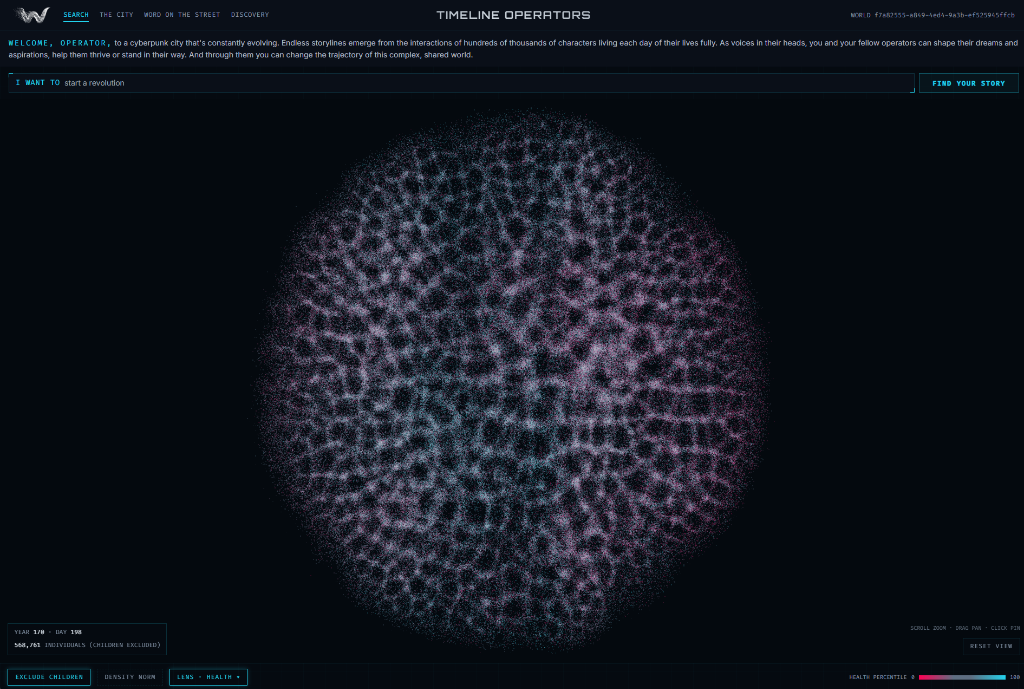
The Architecture
Weltlinie uses a powerful two-layer architecture to create living virtual worlds:
- Layer 1 (The World Engine): A procedural world generation algorithm creates underlying simulation data, modeling over 500,000 autonomous characters, faction borders, and resources.
- Layer 2 (The LLM Narrative Layer): An LLM AI layer sits on top of the world engine. It reads raw simulation numbers and translates them into believable dialogue, character motivations, and personal histories.
Early Prototypes & Testing
During qualitative user testing on the early HeyNPC prototype, two critical user friction points emerged:
- Sandbox Paralysis: Players entered the vast world and did not know what actions to take because there were no structured goals.
- Multiplayer Griefing Anxiety: Because the simulation was shared, players hesitated to interact with characters for fear of ruining other players' ongoing storylines.
Decision Architecture & Trade-Offs
Decision Architecture: Simulation Interface Comparison
| Approach | Trade-Offs & Technical Limits | Decision Rationale |
|---|---|---|
| Option A: Raw Data Feeds & Graph Dashboards | Presented unfiltered numeric data and dense state graphs for 500,000 entities directly to users. | Rejected: Caused sandbox paralysis and user confusion during early testing. Users did not know what actions to take. |
| Option B: LLM Story Vignettes & Faction Noise Map | Coupled procedural world state with an LLM narrative layer to generate structured story cards with clear player choices. | Selected: Guided player attention, clarified character motivations, and saved several development epics of backend engineering. |
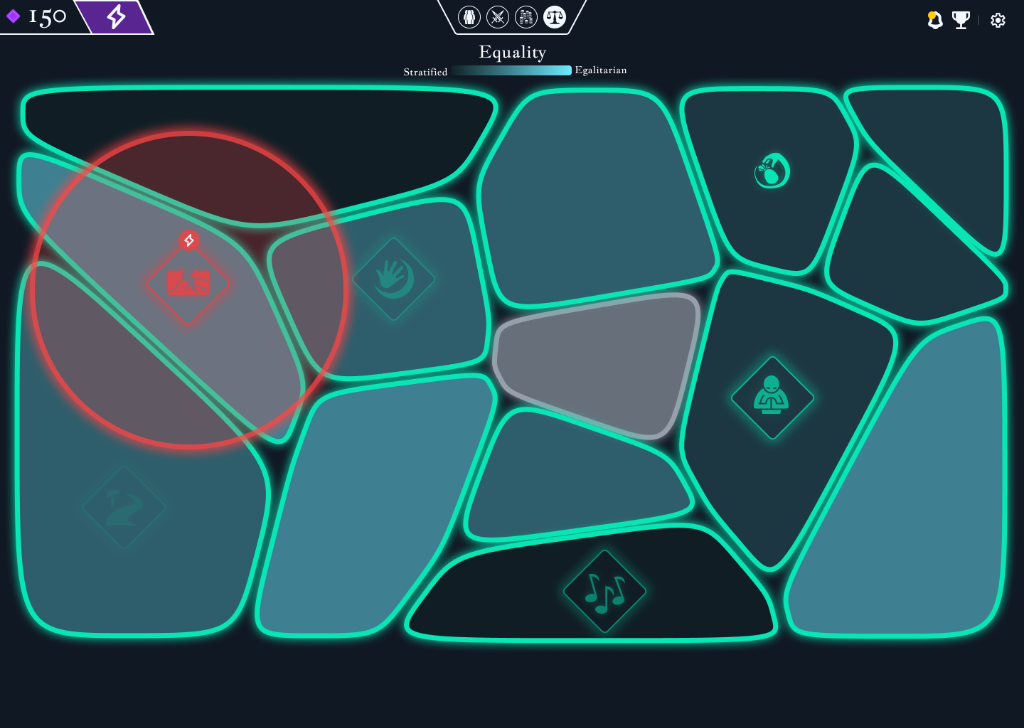
World Map Concept
To help players understand complex global dynamics at a glance, I designed an organizational worldview prototype using cellular noise shapes. This visualization communicates national borders, faction equality, and political tension across regions.
Interactive Vignettes
To solve sandbox paralysis, I designed interactive story cards where the LLM summarizes ongoing world events into discrete narrative moments with actionable player choices.
The Shipped Interface & Impact
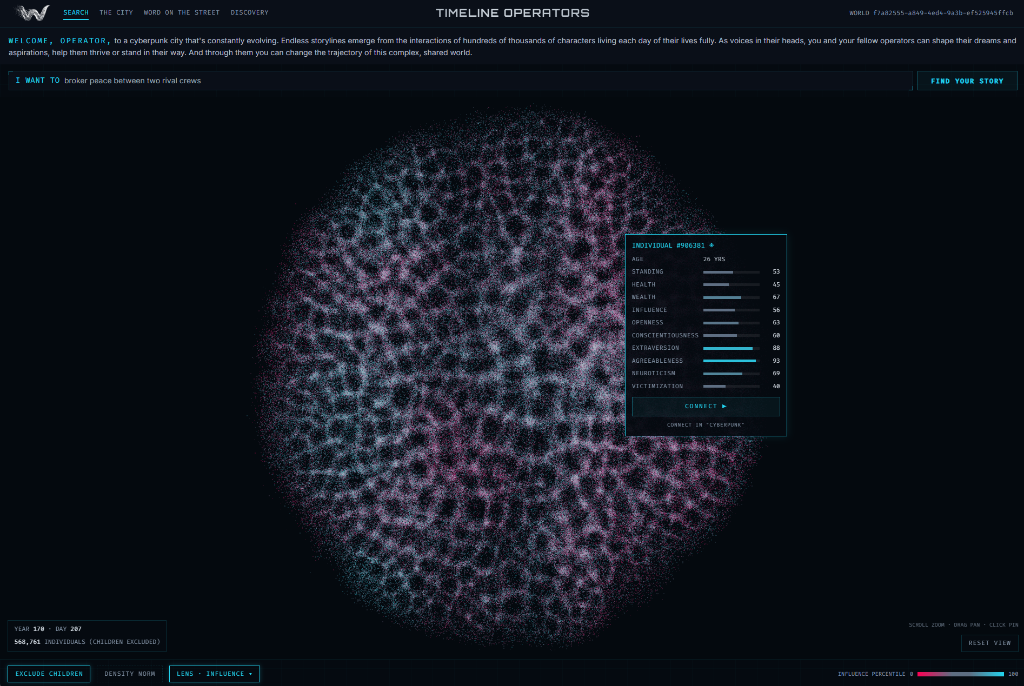
The shipped platform interface, Timeline Operators, gives players deep systemic control. Users can inspect individual characters, analyze relationships, and set natural language objectives.
The project is currently seeking funding and has attracted the interest of prestigious startup organizations, including Y Combinator.
Key Results
- Saved Multiple Development Epics: Validating user interaction patterns through visual prototypes showed that users needed structured goals rather than raw data feeds, saving several development epics of backend engineering.
- Shipped Production Interface: Delivered a real-time inspection interface capable of visualizing 500,000+ autonomous simulation entities.
- Investor & Accelerator Traction: The project is actively seeking funding and has attracted the interest of prestigious organizations like Y Combinator.
Want to discuss this project? Contact Joe at josephnewell90@gmail.com.
